Chat
Activated Carbon Filter for PFAS Removal from SPALECK
Water technology

Clean water thanks to innovative activated carbon filtration

activated carbon filtration PFAS teamwork water treatment

Reading time 2 Minuten

Person mit Brille vor blauem Hintergrund.

From Iris Stenkamp

Published: 02.04.2026

Updated: 02.04.2026

Share

Blog table of contents

Meeting strict wastewater limits with teamwork and technical expertise

What you will learn in this article:

  • Why the removal of PFAS, the “forever chemical,” is critical for landfill operations.
  • How activated carbon filtration acts as a reliable shield against pollutants.
  • Why collaboration within the SPALECK Group accelerates project success.

Strict limits for PFAS in wastewater are currently presenting many plant operators with major challenges. These perfluorinated and polyfluorinated alkyl substances, often referred to as “perpetual chemicals”, hardly degrade in nature and accumulate in the environment. For landfills, this means that conventional cleaning processes are often no longer sufficient.

This is where the expertise of SPALECK Wassertechnik comes into play.

Efficient pollutant elimination with activated carbon

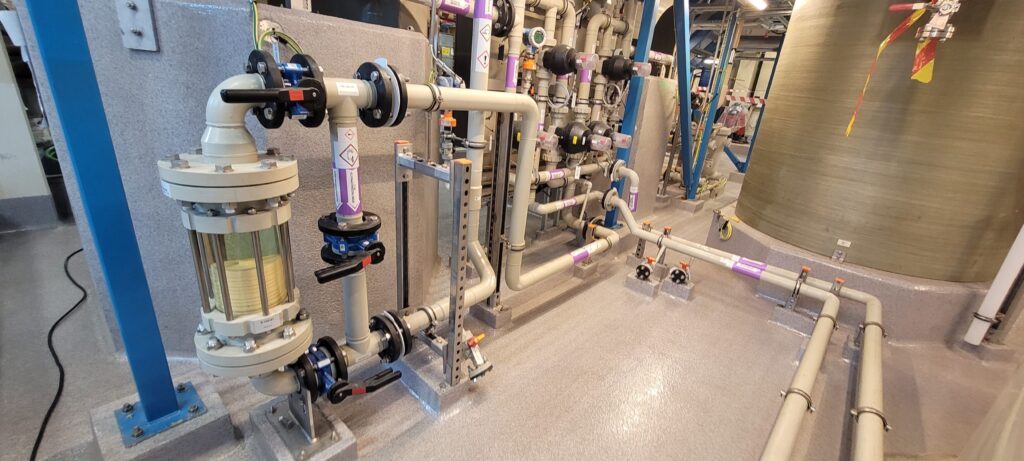
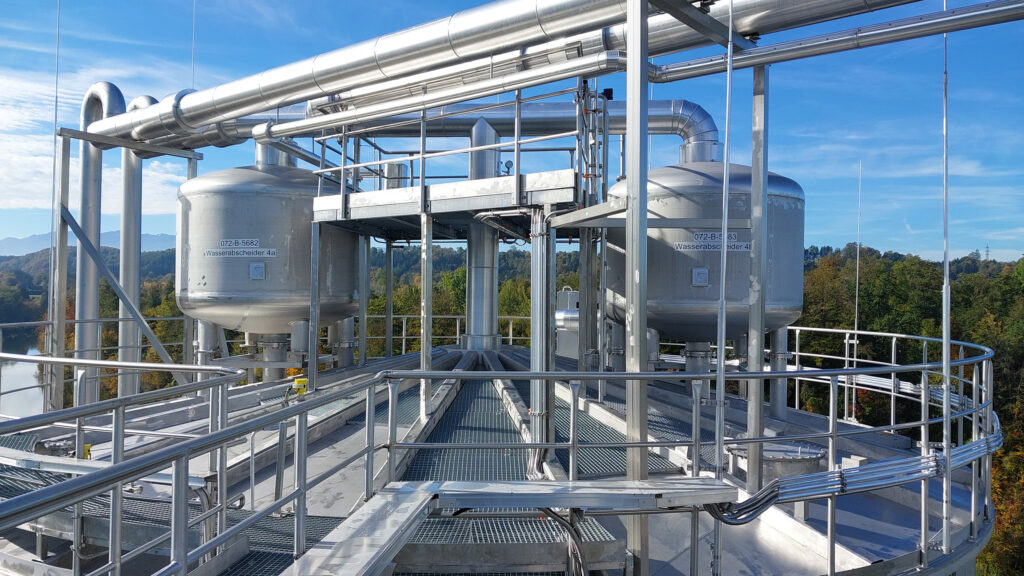
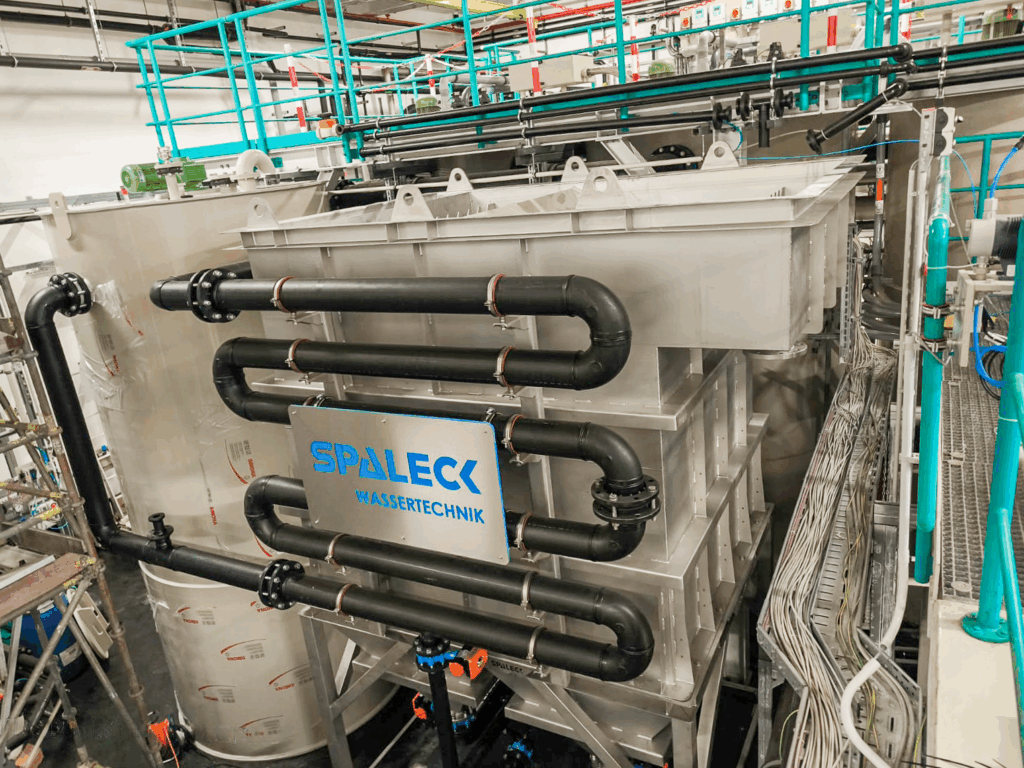
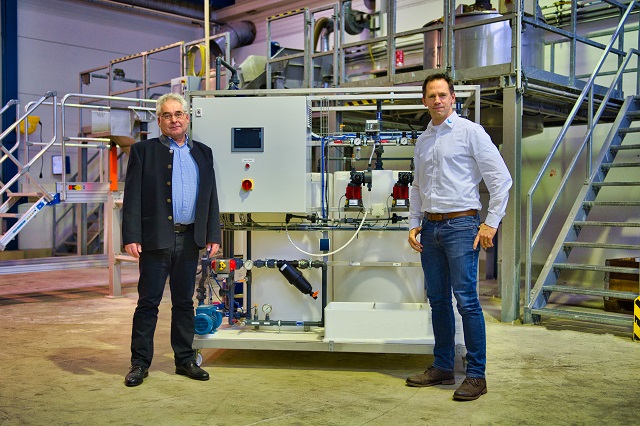
To ensure compliance with the new legal requirements, we have specifically expanded the wastewater treatment of a landfill site to include activated carbon filtration. This technology is key to sustainable water management, as it safely filters even the smallest PFAS concentrations out of the water.

Engineering meets precision: The SPALECK advantage

A project of this complexity requires more than just standard components. The success here lay in the close, interlinked cooperation within our group of companies:

  • SPALECK Wassertechnik: undertook the entire planning, the process engineering design and the final commissioning on site.
  • SPALECK Metal Processing: Ensured the precise production of specialized system components to the highest quality standards.

Living teamwork for the environment

The result is a system that combines technical expertise and precision craftsmanship. Thanks to the short paths between engineering and production, we were able to implement a solution that not only meets the legal requirements, but also offers the customer long-term operational reliability.

This project is a powerful example of how we use internal synergies to solve complex environmental problems – for clean water and a secure future.
Share

About the author

Person mit Brille vor blauem Hintergrund.

Iris Stenkamp

You may also be interested in these blog posts

Frequently asked questions

The precise design of a tension-shaft screening machine is always tailored to the recycled material. Factors such as the composition of the input material, its moisture content, contaminants, throughput requirements, and the recycling goals associated with the input material form the basis for this. Working with you, we define screening sizes, purity requirements, and throughput rates, and use this information to configure the exact machine settings—from screening panels to amplitude and machine features such as the SPALECK FineSideCOVER (FSC) or our MultiDECK technology with a split push rod. Learn more here about our ModularDESIGN+ concept, which we use to find the optimal screening machine for your material. We’d be happy to test the respective recycling material together with you free of charge at the SPALECK TestCenter.

Precise screening of the fine fraction results in clearly defined particle sizes. For example, if the fine fraction ranging from 0 to 10 mm is reliably screened out, downstream sorting equipment—such as eddy current separators, NIR sorters, sensor sorters, and X-ray sorters—operates more reliably and efficiently as a result. In addition, the system’s cleaning requirements are reduced, and higher material purity levels can be achieved. You can see a good example of the benefits of a tensioned-shaft screen in the reference video on municipal solid waste processing at our Swedish customer Tekniska verken. The video demonstrates how a SPALECK tension-shaft screen reduces the load on the downstream eddy current sorters and NIR sorting processes. You can find all the details about the project here.

The service life of screening mats for Flip-Flow screening machines depends heavily on the recycled material, the Recycling process, and factors such as the abrasiveness of the material stream. In many recycling applications, very long service lives are possible. Thanks to our bolt-free, modular clamping system, individual screening mats can be replaced quickly and easily as needed. You can see how this works in the video on our landing page for tension-shaft screen machines. You can get a competitive quote for replacement screening mats through our spare parts service.

READY FOR BETTER SCREENING

Together, we optimize your recycling process