Chat
Anaerobic Water Treatment with SPALECK Water Technology
Water technology

Energy from wastewater

energy from wastewater energy generation wastewater treatment

Reading time 2 Minuten

Person mit Brille vor blauem Hintergrund.

From Iris Stenkamp

Published: 02.04.2026

Updated: 02.04.2026

Share

Blog table of contents

Wastewater treatment that pays off

What you will learn in this article:

  • How anaerobic water treatment unlocks untapped potential.
  • Why modern water treatment is not a cost factor, but rather a driver of efficiency.
  • The importance of a precisely designed water treatment plant based on specific operating parameters.

Industrial water treatment has an image problem in many companies: it is often seen as a necessary evil and a pure cost factor. But this image is changing dramatically. What if your wastewater was no longer a waste product, but a valuable source of energy?

From cost factor to efficiency driver

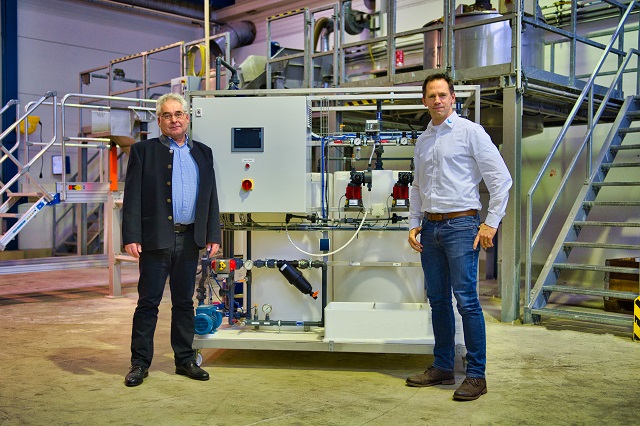
At SPALECK Wassertechnik, we don’t see wastewater as a problem, but as a resource. The key to this transformation is anaerobic water treatment. For us, it is one of the most important levers for real industrial sustainability. The process offers three decisive advantages for modern companies:

  • Biogas production: Organic loads in wastewater are not simply destroyed, but converted into valuable energy.
  • Minimal CO2 footprint: Compared to conventional processes, the system’s own energy requirement is minimal.
  • Holistic efficiency: The cycle is closed – from the first cleaning stage to the finished biogas treatment.

Why standard solutions fall short here

In theory, generating energy from wastewater sounds simple, but in practice it is complex. We know that No two wastewaters are the same. The chemical composition, temperature and pollution load vary massively depending on the industry and operation. Anyone who relies on “off-the-shelf solutions” is wasting potential or risking unstable processes. That’s why we develop each system as a unique technical solution.

Individual planning instead of rigid concepts

A solution is only good if it integrates seamlessly into your daily routine. We plan our systems precisely according to your process parameters:

  • What does the system have to do?
  • How much space is available?

Our credo: the technology must adapt to your business – not the other way around. This results in highly efficient systems that perfectly combine ecological responsibility and economic success.
Share

About the author

Person mit Brille vor blauem Hintergrund.

Iris Stenkamp

You may also be interested in these blog posts

Frequently asked questions

The precise design of a tension-shaft screening machine is always tailored to the recycled material. Factors such as the composition of the input material, its moisture content, contaminants, throughput requirements, and the recycling goals associated with the input material form the basis for this. Working with you, we define screening sizes, purity requirements, and throughput rates, and use this information to configure the exact machine settings—from screening panels to amplitude and machine features such as the SPALECK FineSideCOVER (FSC) or our MultiDECK technology with a split push rod. Learn more here about our ModularDESIGN+ concept, which we use to find the optimal screening machine for your material. We’d be happy to test the respective recycling material together with you free of charge at the SPALECK TestCenter.

Precise screening of the fine fraction results in clearly defined particle sizes. For example, if the fine fraction ranging from 0 to 10 mm is reliably screened out, downstream sorting equipment—such as eddy current separators, NIR sorters, sensor sorters, and X-ray sorters—operates more reliably and efficiently as a result. In addition, the system’s cleaning requirements are reduced, and higher material purity levels can be achieved. You can see a good example of the benefits of a tensioned-shaft screen in the reference video on municipal solid waste processing at our Swedish customer Tekniska verken. The video demonstrates how a SPALECK tension-shaft screen reduces the load on the downstream eddy current sorters and NIR sorting processes. You can find all the details about the project here.

The service life of screening mats for Flip-Flow screening machines depends heavily on the recycled material, the Recycling process, and factors such as the abrasiveness of the material stream. In many recycling applications, very long service lives are possible. Thanks to our bolt-free, modular clamping system, individual screening mats can be replaced quickly and easily as needed. You can see how this works in the video on our landing page for tension-shaft screen machines. You can get a competitive quote for replacement screening mats through our spare parts service.

READY FOR BETTER SCREENING

Together, we optimize your recycling process