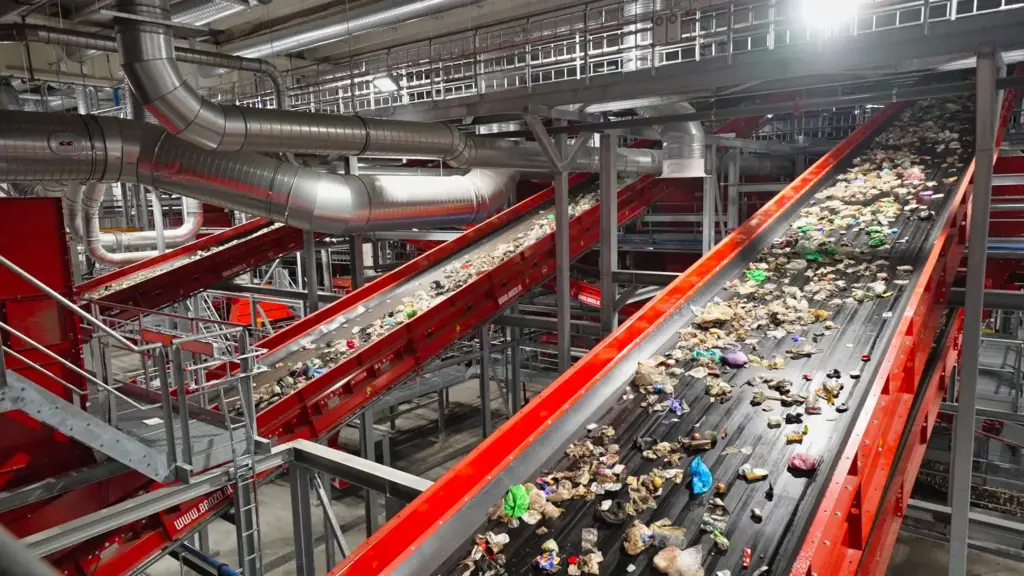


The term “bulky waste” aptly describes this recyclable material: it is bulky waste that generally does not fit in the recycling bin.
From a recycling technology perspective, bulky waste is a very heterogeneous material. In terms of composition, size, and grain size distribution. Typical components include wood, plastics, furniture, textiles, mattresses, and composite materials. In other words, many high-calorie materials that are therefore often used as substitute fuels in thermal recovery.
And since this form of thermal recycling places its own specific demands on the input material, bulky waste must first be processed for incineration after it has been collected.
This process often involves the use of shredders, ferrous and non-ferrous sorters, and screening machines, such as SPALECK recycling screens. These enable the precise sorting of bulky waste by particle size. The screening process is designed to produce a substitute fuel that is optimal for combustion and therefore of high quality.
Optimizing Thermal Recovery Through the Right Screen Mesh Size
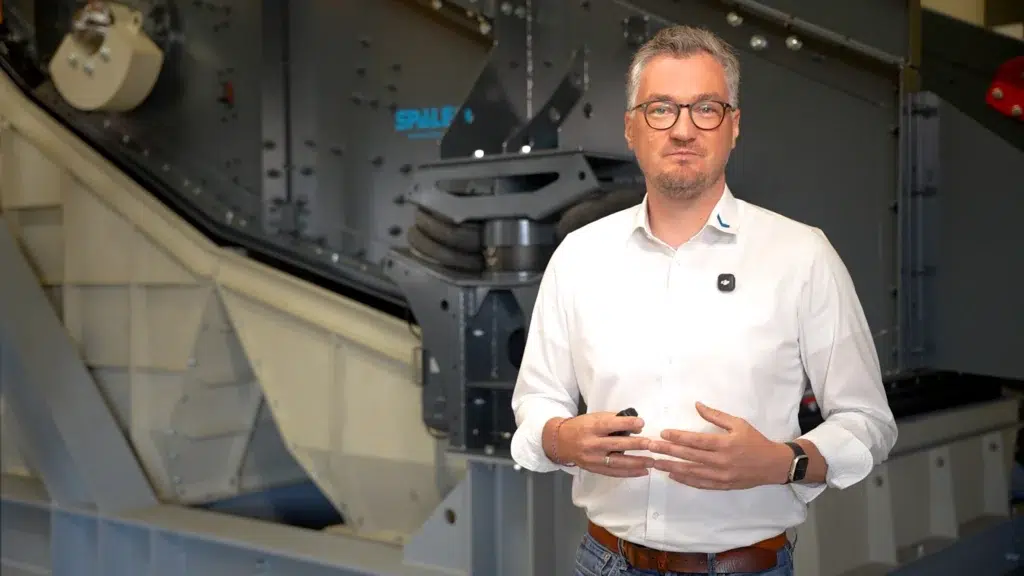
“Perhaps you’ve noticed this when building a campfire: Small pieces of brush burn quickly and completely, while thick logs are still smoldering the next morning but haven’t burned all the way through,” says SPALECK screening expert Dominik Becker, explaining the importance of screening for the production of substitute fuel from bulky waste.
“Our customers’ goal is to optimize bulky waste for thermal recycling by sorting it by size. Both the fine fraction and the oversized material must be reliably screened out so that the power plant receives only material of a size with optimal combustion properties,” Dominik Becker continued.
This principle also applies to commercial and industrial waste, as well as to RDF production.
In this project example, the recycling company needed to sort the material into two target fractions for thermal recovery
- 0–40 mm
- 40–125 mm
- and > 125 mm.
The oversize material from the > 125 mm is then fed into the shredder for further shredding and subsequently sent for thermal recycling as well.
Using Screening Tests to Determine the Optimal Screen Machine Configuration for Bulky Waste
“The recycling company understands the requirements of its substitute fuel customers. That’s why we conduct screening tests using the recycling company’s original input material,” says Dominik Becker, describing a typical project process for determining the optimal recycling technology for bulky waste.
At the SPALECK TestCenter, screening technology application engineers conduct screening tests in collaboration with the recycler’s recycling experts. “In this specific case, the recycling company brought us about 15 BigBags of typical bulky waste,” reports Frederik Stening, Head of Application Engineering at SPALECK.
Before conducting a sieving test, questions and objectives such as the following are discussed:
- Which particle size fractions are optimal for combustion?
- What throughput is required?
- How is bulky waste processed?
- What quality standards must the alternative fuel meet?
“These factors, combined with the economic goals of processing, give both the customer and us the opportunity to test out different screen machine settings. What’s really in the material? Has the screen size been selected optimally? Or could adjusting the screen liners open up new marketing opportunities?” continues Frederik Stening.
The extensive material testing conducted at the TestCenter is free of charge for prospective customers. The key benefit for him lies in the fact that he can test, optimize, and verify his capital investment on an industrial scale before it is fully implemented.
Frederik Stening: “The TestCenter not only optimizes processing, it also serves as a development and innovation hub for the circular economy. Customers benefit directly from additional screening tests specific to their industry and material class.”
After Testing Comes Production—Designing a Screening Machine for Bulky Waste
Based on the results of the screening tests and consultation with the customer, an optimal setup for the screening process is determined. This process determines the key aspects of the screening machine configuration, such as the layout and size of the screen deck, material distribution, and technical features.
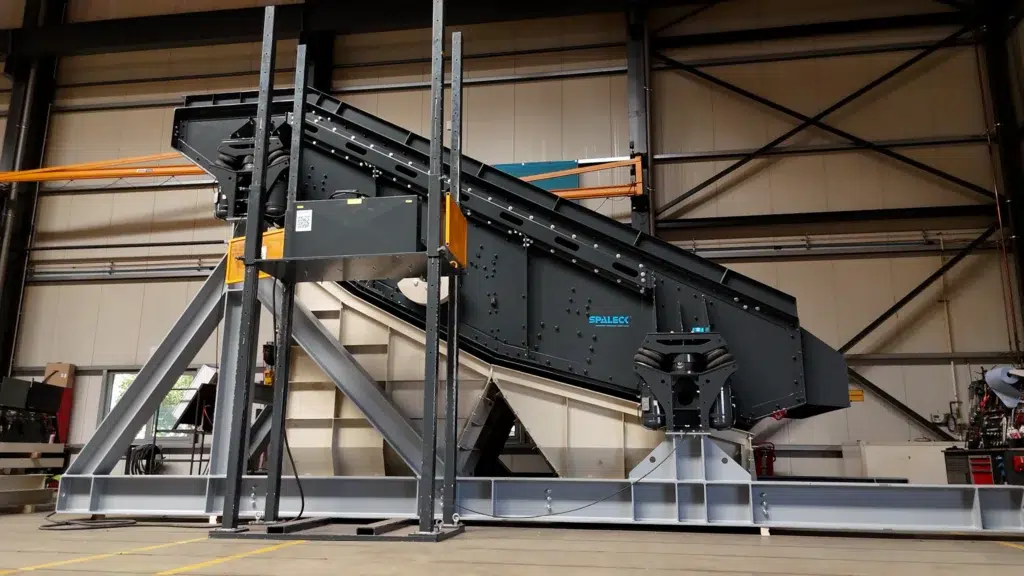
Dominik Becker: “This is the point at which details such as the installation situation, system layout, and design specifics are discussed and finalized.” In this recycling project for bulky waste processing, the recycling screen was custom-configured according to the SPALECK ModularDESIGN+ principle. The screening machine is equipped with a steel substructure as well as fine and target grain chutes. This allows the recycler to place the machine seamlessly onto the concrete storage boxes.
The SPALECK SmartSUSPENSION air suspension system for screening machines ensures that the machine’s vibrations are dampened as much as possible.
The Solution in Detail: An Optimally Configured Bulky Waste Screening Machine
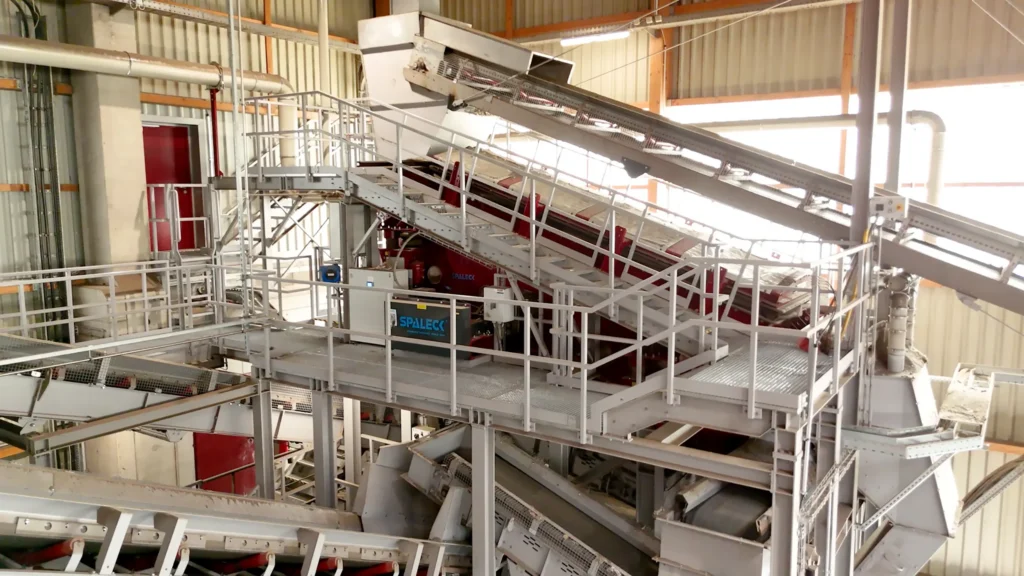
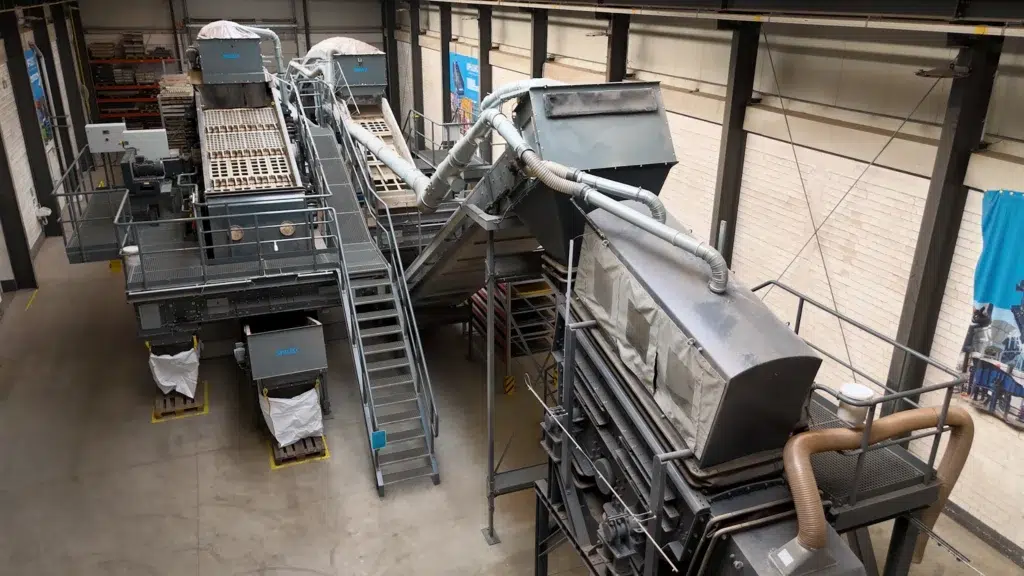
The facility shown here was specifically designed for the processing of bulky waste. It processes about 20 metric tons of material per hour and sorts the bulky waste by size into the following fractions: 0–40, 40–125, and oversized material ( >, 125 mm).
The target range of 0 to 40 and 40 to 125 millimeters was determined in collaboration with the customer and precisely meets the requirements for thermal recycling.
Conclusion: Cost-effective bulk waste processing does not begin with the selection of a standard screening machine. The goal is to determine and verify the correct settings for the customer’s material. That is exactly why, at the start of the project, the focus was not on the machine but on the joint material testing. This provides planning certainty and serves as the basis for the correct machine configuration.
Would you like to test your material, too? We cordially invite you to visit your SPALECK TestCenter.
Advanced Expertise
LIBS, XRT, NIR, and More—Why Modern Sorters Love Good Screening Machines
Products
Detailed information about the recycling screen
Videos
How the Right Screening Technology Improves Sorting Efficiency in Municipal Solid Waste Recycling Facilities
You are currently viewing a placeholder content from YouTube. To access the actual content, click the button below. Please note that doing so will share data with third-party providers.
Explanatory and animated video of the SPALECK recycling screen
You are currently viewing a placeholder content from YouTube. To access the actual content, click the button below. Please note that doing so will share data with third-party providers.
Recyclable Material Screen in Waste Wood Processing for Thermal Recovery
You are currently viewing a placeholder content from YouTube. To access the actual content, click the button below. Please note that doing so will share data with third-party providers.